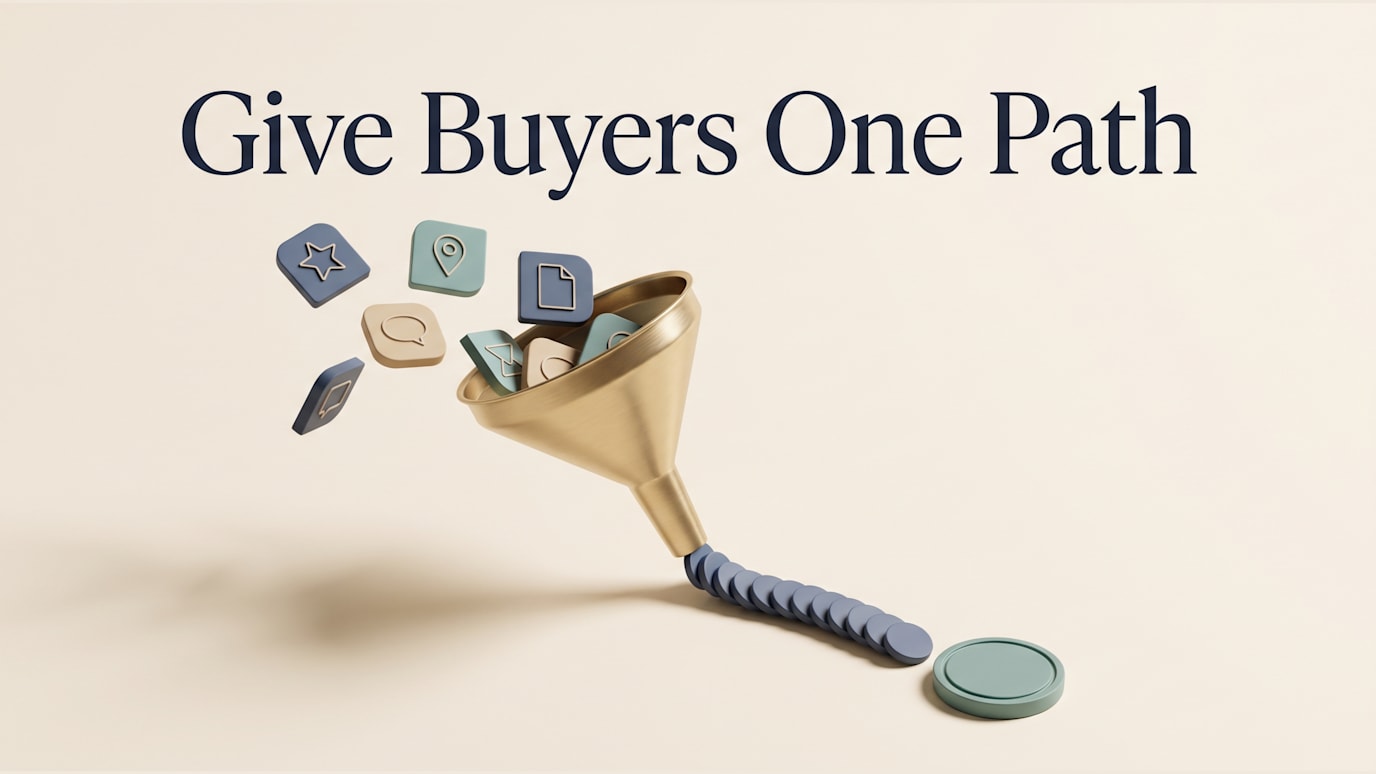
Being found online is useful only if the right people find a clear, consistent reason to take the next step with you.
A customer may see your website, a review, a social profile, a search result, a directory listing or a shared post before they ever contact you. Online visibility is the work of making those moments easier to find and easier to trust.
If those moments say different things, the customer has to do extra thinking. If they cannot tell what you do, who you help or why you are credible, visibility becomes noise instead of demand.
Quick answer
Online visibility means being findable where customers look.
It also means being clear when they find you.
Consistency matters more than showing up everywhere.
Start with the pages and profiles buyers already check.
Online Visibility Is Not the Same as Being Everywhere
The plain online visibility meaning is simple: your business can be discovered, understood and checked online. That includes search results, your website, social platforms, reviews, maps, videos, articles, product pages and any public place where someone forms an opinion about you.
The mistake is treating visibility as a volume game. More posts, more profiles and more mentions do not automatically create more customers. They can create confusion if each one describes your business differently.
A better question is: when someone finds you, can they quickly answer these?
What do you sell?
Who is it for?
Why should they trust you?
What should they do next?
Visibility has two jobs. The first is being found. The second is making the next decision feel safe enough to continue.
Check the Places Customers Already Use to Judge You
Before adding another channel, look at the places that already shape first impressions. Your website often carries the clearest explanation, but it is rarely the only source. A customer may also check reviews, social posts, local results, videos, older blog articles or a profile someone shared with them.
A useful check is to search your business name, your main service, and the questions customers usually ask before buying. Then compare what appears with what you actually want people to believe.
If the picture feels scattered, your digital footprint may need attention before you publish more. Old pages, incomplete profiles and inconsistent wording can weaken trust even when your current marketing is stronger.
Tip: do not start with every platform. Start with the places a serious buyer is most likely to check before contacting you.
Make the Message Match Before You Chase More Reach
Online visibility improves when the message is consistent enough to be recognized in different places. The wording does not have to be identical everywhere, but the meaning should not drift.
Use this simple order:
Clarify the offer. Say what you do in words customers use.
Clarify the audience. Make it obvious who the offer fits.
Clarify the proof points. Show why you are a credible option.
Clarify the next step. Tell people how to move forward.
Review the public trail. Update places that still say the old thing.
This is where brand voice matters. A formal website, a casual social profile and a vague sales deck can make one business feel like three different companies.
If your team uses AI to help write pages, posts or follow up messages, give it approved facts and voice rules. Otherwise, faster output may simply spread the inconsistency faster.
Use Each Channel for the Decision It Can Support
Different visibility channels do different jobs. A search result may help someone discover you. A review may reduce doubt. A social post may remind them you exist. A service page may help them decide whether to contact you.
Channel | Best job | Risk if unclear |
|---|---|---|
Website | Explain the offer and next step | Visitors leave without acting |
Reviews | Support trust | Good reputation is hard to interpret |
Social profiles | Show activity and perspective | Attention does not become interest |
This is also where the online visibility pros and limits become clear. The upside is that customers can find, check and revisit you without a salesperson present. The downside is that every weak or outdated touchpoint can participate in the decision.
If you cannot tell which gaps matter first, Schedule your AI Business Assessment to diagnose what is holding AI and growth systems back, identify the two or three places AI would pay for itself first, and leave with a prioritized roadmap either way.
A Simple Visibility Review Shows What to Fix First
Here is an illustrative way to review your visibility without turning it into a major project.
Starting point: an established business has a strong service, but search results show an old offer, the website explains a newer offer, and the main social profile talks mostly about events.
Action: choose one core customer question, then review the first five public places that answer it.
Sample result: the business sees that discovery is not the main issue. The problem is that each place gives a slightly different reason to trust them.
Human review: someone still has to decide which message is accurate, what proof can be used publicly, and which pages or profiles deserve attention first.
That review can prevent wasted work. Instead of posting more, the business fixes the surfaces that already influence customers.
Know When to Bring in Help Instead of Adding More Content
More content can help when the foundation is clear. It can hurt when the foundation is missing. If your team is unsure what to say, what to update, or which channel matters, publishing faster may only multiply the problem.
Online visibility experts should help you connect visibility to business priorities, not just recommend more activity. The useful work is diagnosis first: where customers are looking, what they are finding, what feels inconsistent, and which fixes support growth.
Your online reputation matters here too. Reviews, public comments and third party mentions can affect whether attention becomes confidence. If you suspect that trust is leaking before people contact you, read Is Your Online Reputation Costing You Sales?.
The goal is not to be loud. The goal is to be findable, understandable and credible in the moments that matter.
If your visibility is scattered, the next step is to diagnose the business context before adding more tools or channels. Strategic Marketer’s AI Business Assessment is a working session about your business, not a software demo. You come away with a clear diagnosis, the two or three places AI would pay for itself first, and a prioritized roadmap you keep either way. There is no pressure or obligation, and if it is not a fit, they say so.
Questions Owners Ask About Online Visibility Problems
What is the first online visibility problem to fix?
Start with the place customers already use before contacting you. For many businesses, that is the website, review profile or search result for the business name. Fix clarity and consistency there before adding new channels.
Is online visibility the same as SEO?
No. SEO can help people find you through search, but online visibility is broader. It includes your website, reviews, social profiles, articles, videos, directories and any public touchpoint that helps customers understand or judge your business.
What does online visibility Instagram usually mean?
It usually means using Instagram as one part of being found and remembered online. The key question is whether the profile helps a real buyer understand what you do, who you help and what to do next.
Are online visibility synonyms useful for planning content?
They can be. Phrases like digital presence, online presence, discoverability and findability can help you think beyond one channel. Just do not let synonyms distract from the real job: helping the right customer find and trust you.
How do I know if more content will help?
Check whether your existing public information is accurate, consistent and useful. If the foundation is clear, more content may extend reach. If the foundation is confused, more content may spread mixed signals faster.
Should I hire online visibility experts or fix it internally?
Fix what your team can clearly see: outdated pages, incomplete profiles and inconsistent wording. Bring in help when you cannot tell which gaps matter, how visibility connects to growth, or what system should guide future content.