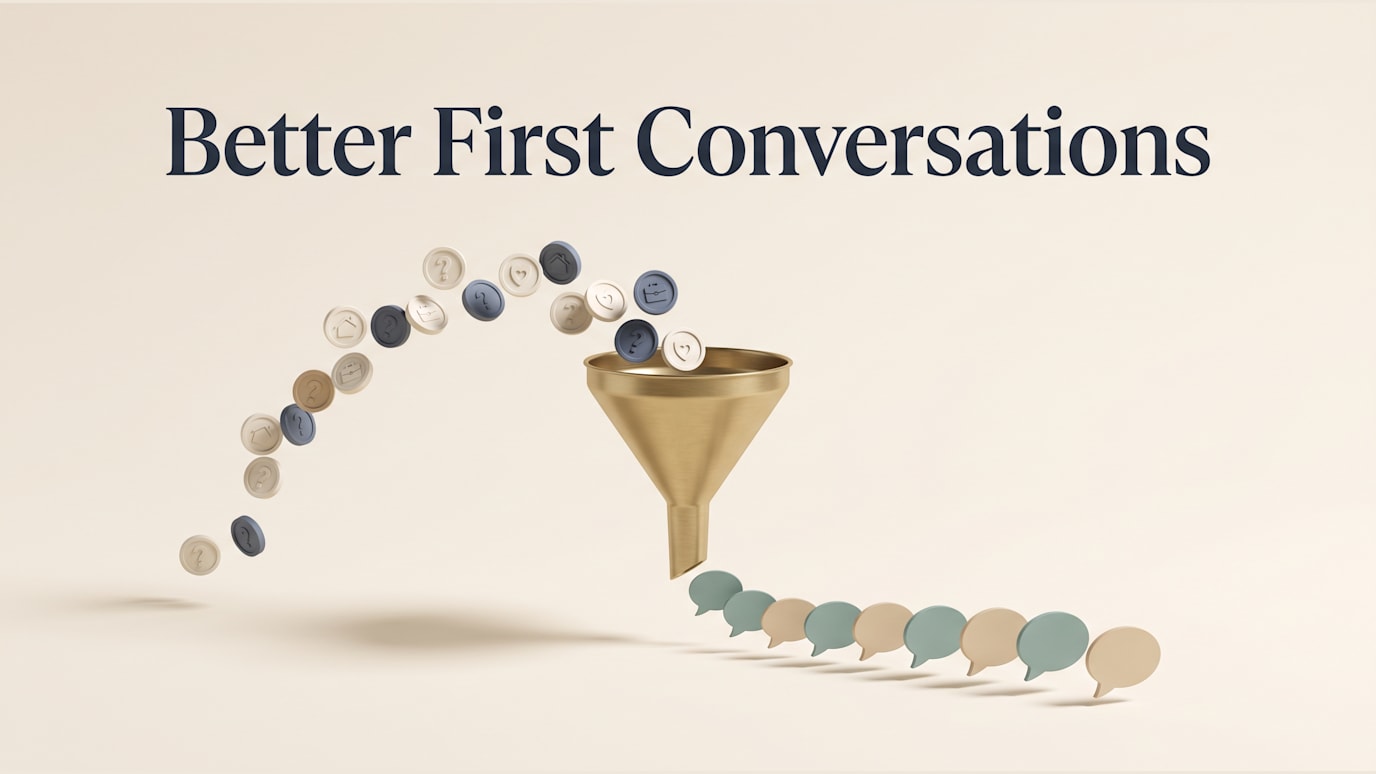
A life insurance lead is only useful if it gives someone a clear reason to talk and gives your team enough context to follow up well.
Someone may fill out a form, download a guide or ask a pricing question, but that does not mean they are ready for a policy conversation. The job is to move from vague interest to a safer next step.
Lead generation for life insurance often fails when every lead is treated the same. A young parent, a business owner and someone reviewing cover after a major life change may all need different follow up, even if they came through the same page.
Quick answer
Start with the buyer's real concern.
Capture enough context to respond well.
Follow up with relevant next steps.
Fix the system before buying more leads.
What Lead Generation for Life Insurance Has to Prove
Good lead generation does not begin with a channel. It begins with the question a buyer is trying to answer before they trust you with a conversation.
For life insurance, that question is rarely just “What does it cost?” It may be “How much cover is enough?”, “Can I protect my family if something happens?” or “Is this going to become a pushy sales call?”
That means your lead path should prove three things quickly:
You understand the concern behind the request.
You can explain the next step without pressure.
You will not waste the buyer's time with irrelevant follow up.
A broader lead generation system should give sales a real next step, not just a name in a spreadsheet. If you want the wider principle, see Lead Generation That Gives Sales a Real Next Step.
Start With the Buyer Question, Not the Lead Source
The source of a lead matters, but it should not decide the entire conversation. A paid ad, referral, search visit or social post may all produce the same surface action while hiding different levels of intent.
Before you write a landing page or set up automation, define the buyer question you are answering. Keep it plain:
What situation might make this person look now?
What are they worried will happen if they choose badly?
What would make the next step feel safe?
What does your team need to know before replying?
This prevents one common mistake: offering a quote too early when the buyer still needs orientation. A quote request can work, but only when the page explains what information is needed, what happens next and why the person is not committing to anything by asking.
Capture Context That Makes Follow Up Useful
A lead form should be short enough to finish and specific enough to guide a human response. Asking for every detail creates friction. Asking for only a name and email creates guesswork.
Use the first page to sort intent, not to complete the whole sale.
Capture point | Why it matters | What it changes |
|---|---|---|
Reason for looking | Shows the buyer's concern | First follow-up message |
Preferred next step | Reduces pressure | Call, email or information |
Basic situation | Helps avoid generic advice | Questions your team asks |
Do not collect sensitive details unless they are truly needed for the next step and you have a clear reason to ask. The goal at this stage is not to replace the conversation. It is to make the conversation more relevant from the first reply.
Personalize the Follow Up Without Making It All Manual
Personalization does not mean writing every message from scratch. It means using the context you already have to avoid sending the same reply to everyone.
For example, a buyer who asks about protecting a young family should not receive the same opening as someone reviewing cover for a business loan. The structure can repeat, but the first line, useful resource and suggested next step should match the concern.
That is where AI can help, if the business context is in place first. Strategic Marketer's Business Intelligence Agent is built around brand voice, products and services, customer intelligence and a source of truth, so AI systems do not have to guess what the business says or sells.
If your follow up depends on scattered notes, disconnected tools or generic AI output, Schedule your AI Business Assessment to find what is holding the system back.
For more on relevant follow up, read What Is Personalization in Marketing? Stop Wasting Follow Up.
A Worked Example of a Better Next Step
Consider a simple life insurance page that says, “Get a free quote.” That may attract clicks, but it gives the team little to work with and can make cautious buyers hesitate.
Starting point: A visitor asks for information but does not know how much cover they need.
Better page promise: “Find out what to consider before choosing life insurance cover.”
Form question: “What made you look into cover today?”
Sample follow up: “Thanks for reaching out. Since you mentioned wanting to protect your family, the first useful step is to understand the amount of cover that would fit your situation. We can walk through that and explain what information is needed before any recommendation.”
The change is not just softer wording. It gives the buyer a safer reason to respond and gives the team a specific opening for the conversation. A human still needs to review the situation and decide what advice or next step is appropriate.
Fix the System Before You Pay for More Leads
If leads are arriving but conversations keep stalling, the problem may not be volume. It may be unclear positioning, weak capture questions, inconsistent follow up or a missing source of truth.
Before increasing spend, check the path:
Does the page answer the buyer's real concern?
Does the form capture useful context?
Does follow up match the reason for interest?
Does your team know what to say next?
Are repeated questions being answered consistently?
Takeaway: More leads will not fix a follow-up system that treats every buyer the same.
The practical next move is to diagnose the gap before adding another campaign, tool or automation. That keeps the focus on better conversations, not just a fuller pipeline.
Ready to find the first useful AI job?
If your life insurance lead generation is producing interest but not clear next steps, the AI Business Assessment can help diagnose what is holding AI back, identify the two or three places it would pay for itself first and give you a prioritized roadmap you keep either way.
Questions Owners Ask About Life Insurance Leads
What makes a life insurance lead worth following up?
A useful lead gives you both permission and context. Name and email are not enough if your team cannot tell why the person reached out. A short reason for looking, preferred contact method and next-step expectation usually make follow up more relevant.
Should I ask for a quote request or offer information first?
It depends on intent. If the buyer is already comparing options, a quote request may fit. If the buyer is uncertain, an educational next step can feel safer. The page should make clear what happens after the form.
How much should I personalize the first reply?
Personalize the opening around the stated concern, then use a repeatable structure. You do not need a unique essay for every lead. You do need to show that the response matches why the person asked.
Can AI write life insurance follow up messages?
AI can help draft structured follow up when it has the right business context, brand voice and approved facts. A person should still review the message, especially where advice, suitability or sensitive customer information may be involved.
What should I fix before buying more leads?
Check the message, form and follow-up process first. If the page creates vague interest, the form captures too little and the reply is generic, more traffic will likely create more sorting work instead of better conversations.
Where should I begin if my current leads are mixed quality?
Start by reviewing the last group of leads and sorting them by reason for interest. Look for patterns in who responded, who disappeared and what information was missing. That will show which capture question or follow-up step to improve first.