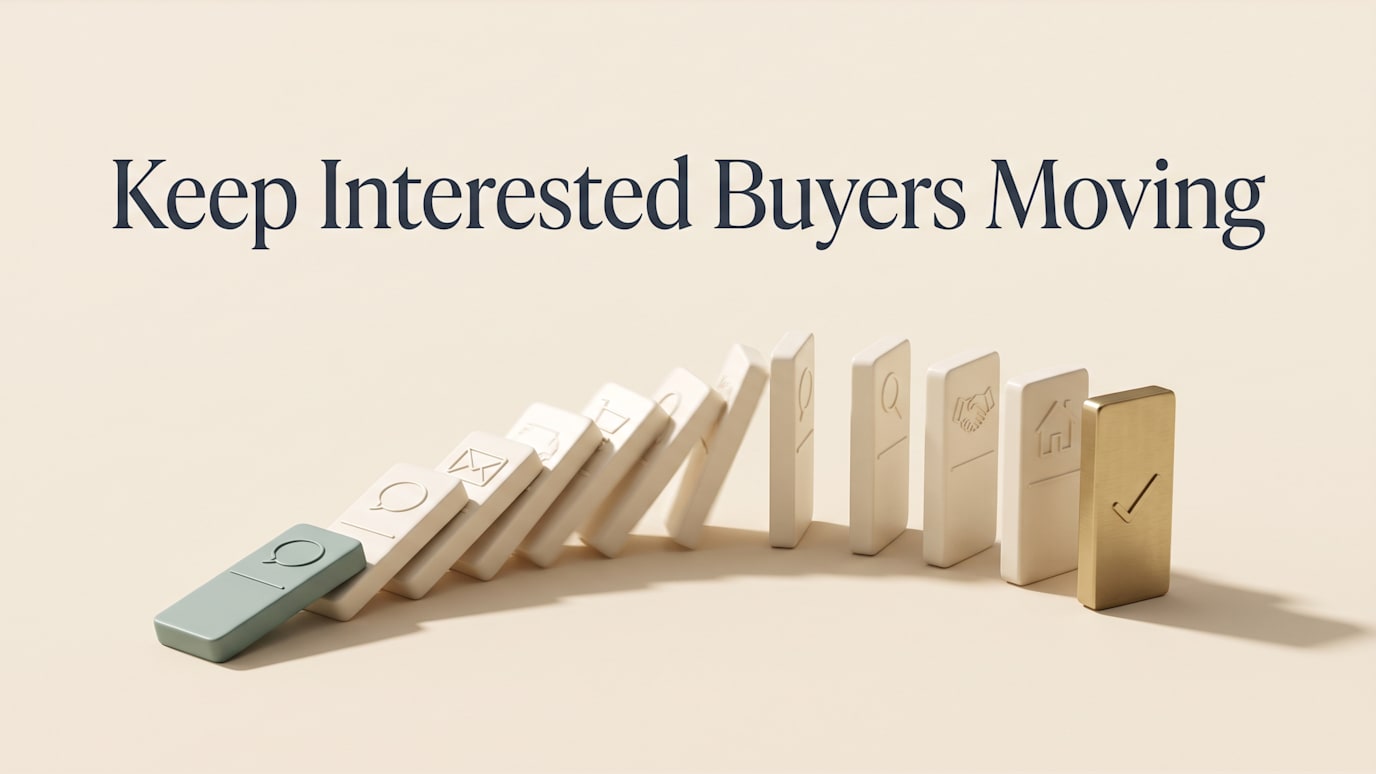
Email feels easy to ignore when inboxes are crowded, but the better question is whether your follow up gives people a reason to keep moving.
If someone has already asked a question, started a trial, viewed a product, downloaded a guide, or spoken with your team, silence is expensive. Email is not dead. Lazy, disconnected email is.
Quick answer
Email marketing is not dead.
Generic blasts are easier to ignore.
Useful follow up still matters.
Context decides whether email helps.
So, Is Email Marketing Dead for Businesses That Need Sales?
No. The channel is still useful when it supports a real customer decision. It becomes weak when it is treated as a cheap way to interrupt everyone at once.
A small business does not need more email for the sake of more email. It needs messages that help the right person take the next step: ask a question, compare options, come back to a cart, book a conversation, renew, reorder, or understand what happens next.
Takeaway: Email works best when it is part of follow up, not a substitute for knowing the customer.
That difference matters because the inbox is not the strategy. The strategy is deciding who needs to hear from you, why they care now, and what the message should help them do.
Why Email Started Feeling Dead in the First Place
Email often feels broken because the business behind it is unclear. The list is mixed, the message is generic, and every send asks for attention before earning it.
Weak email habit | What the customer feels |
|---|---|
Same message to everyone | “This is not about me.” |
Too many promotions | “They only write when they want something.” |
No useful next step | “I do not know what to do with this.” |
That is not proof that the channel has died. It is proof that the message has no job.
The fix starts before the email is written. You need to know the situation the customer is in, the question they are likely asking, and the next action that would genuinely help. Without that, even polished copy becomes noise.
Where Email Still Earns Its Place in Follow Up
Email earns its place when it carries context from one customer moment to the next. A first inquiry, an abandoned quote, a product question, a consultation request, or a repeat purchase window all deserve different follow up.
For example, someone who asked about pricing does not need the same message as someone who has never heard of you. Someone who bought once may need help using what they bought before they need another offer.
If your bigger question is where email, AI, and automation should fit inside your business, Schedule your AI Business Assessment. The assessment is a focused conversation that can help diagnose what is holding AI back, identify two or three places it may pay for itself first, and give you a prioritized roadmap you keep either way.
Email becomes stronger when that kind of business context comes first.
Make Each Message Useful Before You Make It Frequent
Frequency is the wrong first question. A useful email can arrive at the right moment and feel welcome. A weak one can arrive once a month and still feel like clutter.
Before sending, check:
Who is this for? Name the customer group or situation.
What do they already know? Do not restart the whole sales pitch.
What are they unsure about? Answer the next real question.
What should they do next? Make the action obvious.
What should stay human? Do not automate judgment or sensitive replies.
This is where personalization matters. It is not only adding a first name. It is matching the message to the reason the person is on your list. For a deeper look at that idea, read What Is Personalization in Marketing? Stop Wasting Follow Up.
Useful email respects the customer’s stage, not just your campaign calendar.
Build a Follow Up Path Instead of Random Blasts
A path is stronger than a pile of one off sends. It helps you decide what should happen after a customer shows interest, rather than relying on someone to remember later.
Start with a simple sequence:
Trigger: What happened? A form fill, purchase, quote request, or question.
Need: What does the person likely need next?
Message: What short answer or reassurance helps?
Action: What should they do after reading?
Review: What response tells you the path should change?
This does not mean every customer receives a long automated sequence. Sometimes the best path is one clear message and a human follow up task.
If repeated follow up keeps slipping, marketing automation may help once the work is clear. This guide explains the broader system: Follow Up Without Hiring Anyone Using Marketing Automation.
The goal is not to send more. It is to miss fewer appropriate moments.
Use AI Without Letting the Email Sound Generic
AI can help draft, organize, and adapt email, but it needs the business’s real facts. Without brand voice, customer intelligence, products, services, and a source of truth, it can produce confident messages that sound like any company.
Worked example
Starting point: A customer asked, “Do you work with businesses like ours?”
Weak reply: “We help many businesses achieve better results with innovative solutions.”
Better direction: “Yes, we may be able to help. The best fit depends on your current systems, what you are trying to improve, and where follow up is breaking down. Here is what we would need to understand first.”
The better version does not pretend to know everything. It guides the next step while protecting trust.
That is why business context matters before automation. Email should sound like your company, reflect what you actually offer, and leave room for a person to check anything important.
Ready to stop guessing where follow up fits?
If email, AI, and automation all feel partly useful but disconnected, the next step is to diagnose the business context first. The AI Business Assessment is one practical way to identify growth gaps, prioritize near term opportunities, and leave with a roadmap you keep either way.
Questions Owners Ask About Email Marketing
Is email marketing dead for small businesses?
No. It is weak when it is generic, inconsistent, or sent without a clear next step. It is still useful when it follows real customer interest and helps someone make a decision.
How often should a business send emails?
Send when there is a reason tied to the customer’s situation. A helpful message at the right moment beats a fixed schedule that trains people to ignore you.
What should I send if I do not want to sound salesy?
Answer the question the customer is probably asking next. Explain a choice, reduce confusion, show what happens after they respond, or help them use something they already bought.
Can AI write my email marketing for me?
AI can help draft and organize email, but it should not guess your facts, offers, tone, or customer promise. Give it approved business context and keep human review on anything important.
What is the first email path to fix?
Start where interest is already visible. That might be a form response, quote request, abandoned cart, consultation inquiry, or post purchase follow up. Fix the moment where silence most often lets people go cold.
Should every email be automated?
No. Automate repeated, low risk follow up only after the message and trigger are clear. Keep sensitive questions, unusual situations, and final judgment with a person.